Penile Enlargement in Montreal: Anatomy, Surgical Techniques, and Modern Innovations
Introduction
Interest in penile enlargement in Montreal has increased in recent years. Men may seek consultation for a variety of reasons, including aesthetic concerns, buried penis related to obesity, or anatomical conditions affecting genital appearance and function.
Despite widespread information on the internet, penile surgery is a complex procedure that must be based on precise anatomical knowledge and carefully selected medical indications.
Recent advances in plastic and reconstructive surgery, combined with improved anatomical understanding of the penile suspensory system, have allowed surgeons to develop safer and more effective techniques for penile enhancement and reconstruction.
Penile Anatomy: Understanding Before Considering Surgery
The penis is not only an external organ. A significant portion of its structure lies internally behind the pubic bone, within the pelvis.
The penis is composed of several anatomical structures:
· Two corpora cavernosa
· The corpus spongiosum
· The urethra
· Neurovascular structures
· A suspensory ligament system anchoring the penis to the pelvis
Recent anatomical studies have demonstrated that the penile suspensory system is more complex than previously described.
Rather than a single ligament, it is composed of four distinct ligaments:
· Fundiform ligament
· Suspensory ligament
· Dense vertical ligament
· Arcuate ligament
These structures form a suspensory apparatus that stabilizes the penis during erection and sexual activity.

Functional Organization of the Penile Ligament System
Modern anatomical research distinguishes two functional groups of ligaments.
Non-stabilizing ligaments
These structures primarily influence the position of the penis:
· Fundiform ligament
· Suspensory ligament
These ligaments may be partially released during certain penile lengthening procedures.à
Stabilizing ligaments
These structures are essential for erectile stability:
· Dense vertical ligament
· Arcuate ligament
· Ischiocavernosus muscles
Preserving these stabilizing structures is critical during surgery to maintain normal erectile function.
What Is Penile Enlargement Surgery?
Penile enlargement refers to a group of procedures designed to improve:
· Apparent penile length
· Penile circumference
· Penile projection
It is important to understand that penile enlargement surgery does not create new erectile tissue. Instead, surgical techniques aim to optimize existing anatomy and improve the external appearance of the penis.
The results vary significantly between patients.
Medical Indications for Penile Surgery
Penile enlargement surgery is not appropriate for every patient. The procedure may be considered in specific medical situations.
Buried Penis
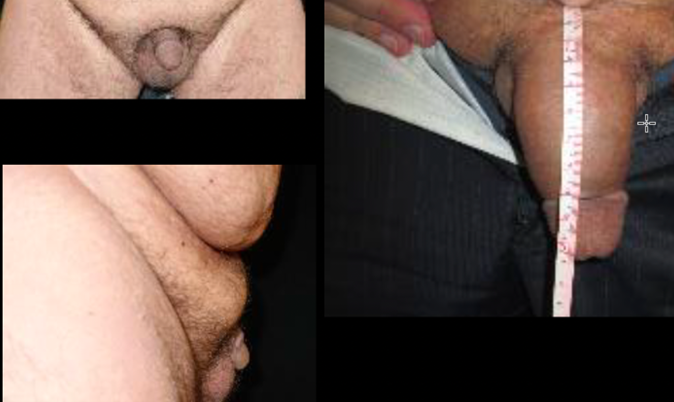
One of the most common indications is adult acquired buried penis.
In this condition, the penis becomes partially or completely hidden within suprapubic tissues.
Causes may include:
· Obesity
· Excess suprapubic fat
· Massive weight loss
· Skin disorders or scarring
Patients may experience:
· Difficulty with urination
· Chronic skin infections
· Sexual dysfunction
· Psychological distress
Micropenis
Micropenis is a rare medical condition characterized by penile length significantly below the normal range for age.
In severe cases, the penis may not reach the scrotum.

Post-weight loss changes
Following significant weight loss, excess suprapubic tissue may obscure the penile shaft.
Corrective surgery may restore normal anatomy and function.

Adult Acquired Buried Penis
Adult acquired buried penis is increasingly encountered in reconstructive urology and plastic surgery.
Although penile length is normal, the organ becomes concealed by suprapubic adipose tissue.
This condition may cause:
· Chronic irritation and infections
· Hygiene difficulties
· Sexual dysfunction
· Reduced quality of life
Surgical correction aims to restore visibility and functional anatomy of the penis.
Contemporary penile surgery often involves a multimodal approach combining several procedures.
Suprapubic fat reduction
Reduction of suprapubic fat is frequently the first step.
This may be performed through:
· Liposuction
· Direct lipectomy
Reducing this fat pad exposes a larger portion of the penile shaft.
Partial ligament release
Controlled division of the fundiform and suspensory ligaments may allow the internal portion of the penis to project further outward.
However, excessive release can lead to complications such as:
· Downward penile orientation
· Erectile instability
· Difficulty during intercourse
For this reason, stabilizing ligaments must be preserved.
Pubic suspension
Anchoring sutures may be used to secure the suprapubic tissues and prevent recurrence of the buried penis.
Penile lipofilling
Autologous fat grafting can be used to increase penile circumference.
Fat is harvested from the patient and injected into the penile shaft to improve:
· Girth
· Proportion
· Aesthetic appearance
Clinical Outcomes
Clinical series examining surgical correction of buried penis have demonstrated encouraging results.
Reported outcomes include:
· Mean increase in flaccid penile length of approximately 4 cm
· Mean increase in circumference of approximately 80%
· High patient satisfaction rates
These outcomes primarily apply to patients with buried penis pathology, rather than cosmetic enlargement in anatomically normal patients.
Limitations of Penile Enlargement Surgery
Penile enlargement surgery must be approached with realistic expectations.
Limitations include:
· Variable results between patients
· Possible postoperative retraction
· Need for postoperative management
In some cases, patients may be advised to use penile traction devices after surgery to stabilize results.
Possible Complications
As with any surgical procedure, penile enlargement surgery carries potential risks.
Reported complications include:
· Prolonged edema
· Phimosis
· Scarring
· Fat graft granulomas
Serious complications are uncommon when the procedure is performed by experienced surgeons.
Consultation for Penile Enlargement in Montreal
The first step in any penile surgery is a comprehensive medical consultation.
During this evaluation, the surgeon assesses:
· Penile anatomy
· Patient expectations
· Medical history
· Risk factors
A personalized treatment plan can then be proposed.
Why Choose a University-Based Plastic Surgeon
Penile surgery requires advanced expertise in both reconstructive and aesthetic surgery.
A university-affiliated plastic surgeon typically offers:
· Advanced surgical training
· Research-based knowledge
· Access to modern techniques
· A rigorous ethical approach to patient care
Conclusion
Penile enlargement surgery is a highly specialized procedure that must be approached carefully and scientifically.
Advances in anatomical understanding of the penile suspensory apparatus have significantly improved the safety of modern techniques.
The primary goals of surgery remain:
· Preservation of sexual function
· Maintenance of erectile stability
· Patient safety and satisfaction
A specialized consultation is essential to determine whether surgery is appropriate.
Scientific References
Danino MA, Dalfen J, Laurent R.Advocating for a Functional Nomenclature of the Penile Suspensory Ligament System.Aesthetic Surgery Journal.
Laurent R, Dalfen J, Trouilloud P, Benkhadra M, Danino MA.New surgical approach for buried penis with partial release of the penile suspensory system associated with fat transfer and suprapubic retraction.Annales de Chirurgie Plastique Esthétique.


Comments